
New
Original price was: $35.97.$25.18Current price is: $25.18.
- Worry-Free Shopping with Safe Payments
- Shop with Zero Worries
- Your Security is Our Promise
- Easy, Fast Returns Guarantee

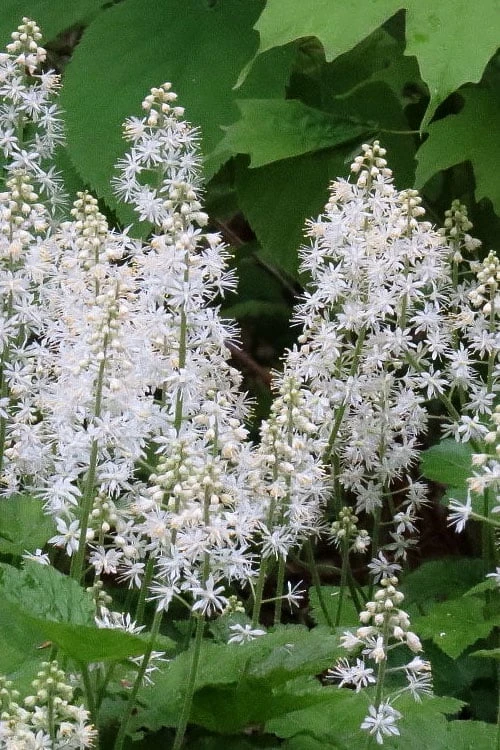
Oakleaf Foamflower
Tiarella cordifolia ‘Oakleaf’
Plant Details
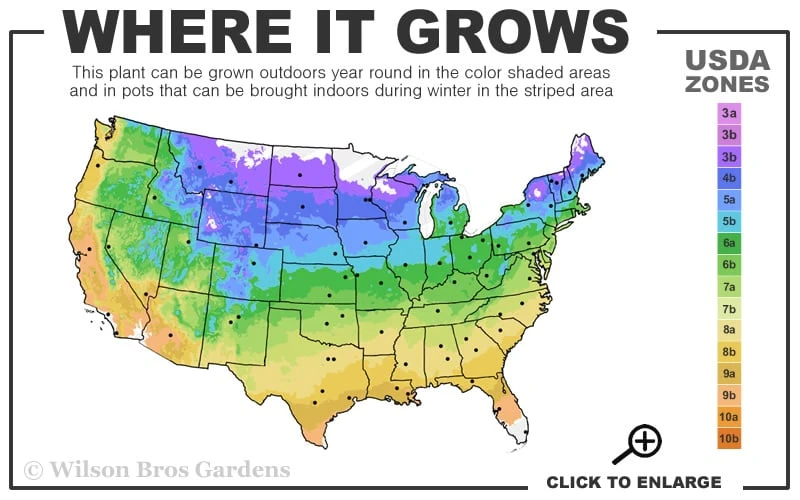
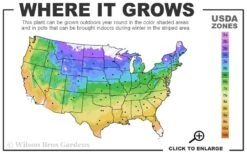
USDA Plant Hardiness Zones: 4a-9b Find Your Zone
Plant Type: Perennial
Height at Maturity: Foliage to 12″; Flowers to 18″
Width at Maturity: 12-18″
Spacing: 15″ for mass plantings, 30″+ for space between plants
Spacing: 15″ for mass plantings, 30″+ for space between plants
Growth Habit / Form: Mounding Clump
Growth Rate: Moderate
Flower Color: White to Soft Pink
Flower Size: Small in spiked clusters
Flowering Period: Summer
Flower Type: Single, in clusters
Fragrant Flowers: No
Foliage Color: Green to Dark Green
Fragrant Foliage: No
Berries: No
Berry Color: NA
Sun Needs: Full Shade to Part Shade, avoid direct afternoon sun
Water Needs: Average, low if in moisture retentive soil
Soil Type: Clay (amended), Loam, Sand (amended), Silt (amended)
Soil Moisture / Drainage: Moist But Well Drained, prefers moisture retentive soil
Soil pH: 5.5 – 6.5 (Moderately Acid to Slightly Acid)
Maintenance / Care: Low
Attracts: Butterflies, Visual Attention
Resistances: Deer, Rabbit, Pollinators, Heat, Humidity, Moisture Retentive Soil
Description
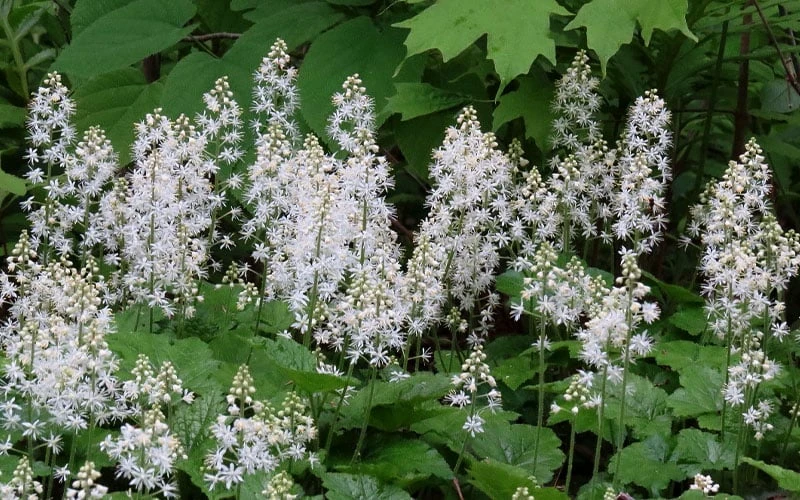
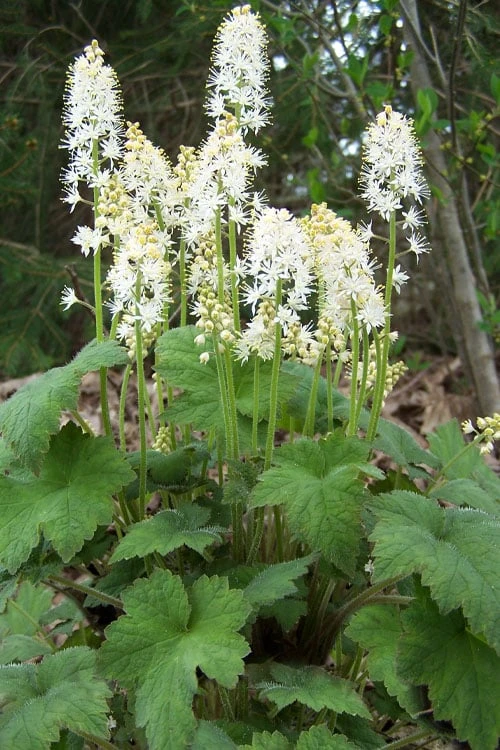
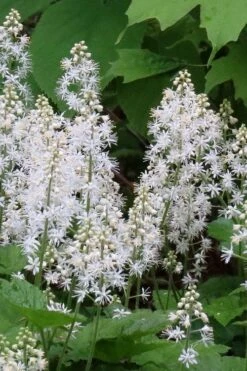
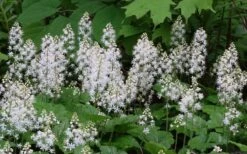
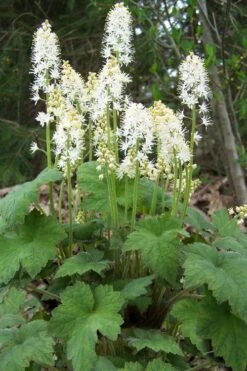
The first and still one of the best of the foamflowers, ‘Oakleaf’ was selected for its superior heat and humidity tolerance and deeply-lobed and dark green oak-shaped leaves that turn a brilliant burgundy color in winter. The fine attributes don’t stop there. Very long blooming, abundant starry spikes of delicate, soft pink to white flowers rise above the attractive foliage mounds during summer. This one prefers life in the shade and moisture retentive soil so is ideal for growing in those shady garden areas where the soil tends to stay damp to moist.
Landscape & Garden Uses
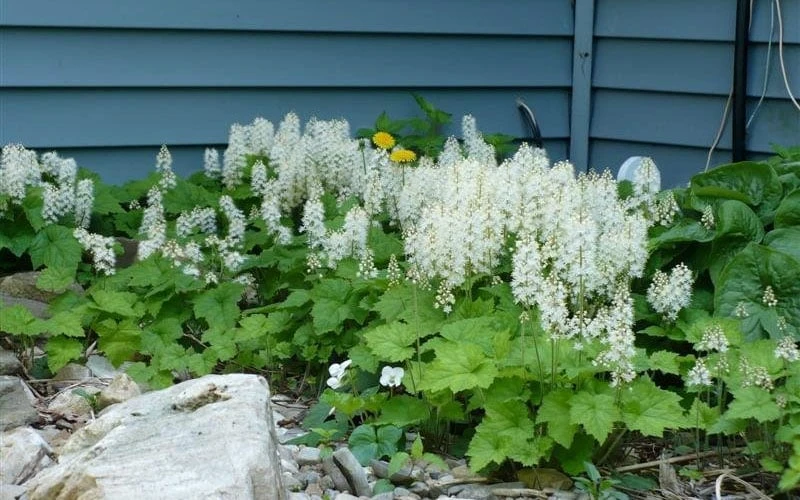
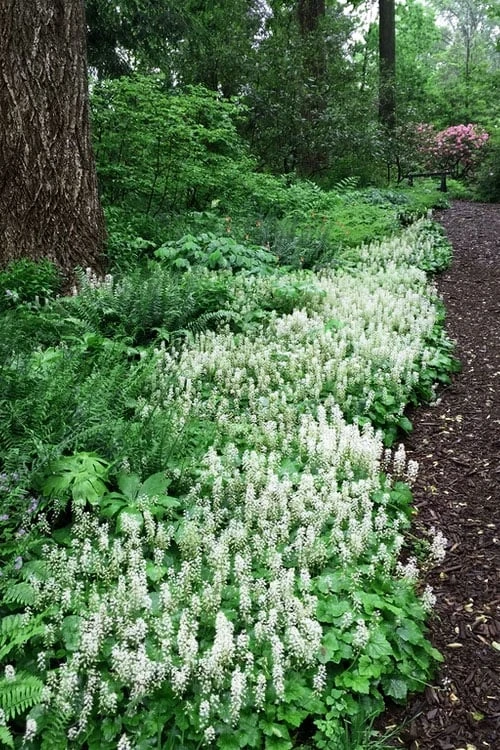
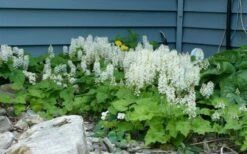
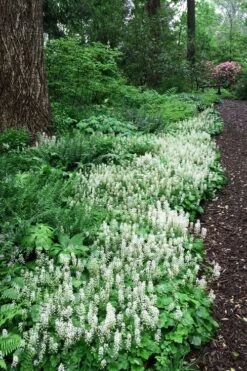
Growing in a mound to 12 inches tall and 12 to 18 inches wide, with flowers up to 18 inches tall, the Oakleaf Foamflower is ideal for use as an accent in smaller garden spaces and container gardens or in groupings or as a border along walks and pathways or shady garden beds. A fine addition to woodland gardens, rock gardens, perennial shade gardens and pollinator gardens.
In garden beds or containers, we like to combine Foamflower plants with Heuchera, Hosta Lilies, perennial Ferns and other part shade to shade loving plants and trees.
Suggested Spacing: 15 inches apart for mass plantings; 30 inches or more apart for space between plants
How To Measure Total Square Feet Of A Planting Area
How Many Plants Needed To Cover A Planting Area?
Growing Preferences
When planted right, and in the right spot Foamflower are easy to grow.
Sun Preference: Though Foamflower tolerate full sun in cooler zones north of USDA Zone 7 they appreciate some afternoon shade in USDA Zones 7-9. If grown in full sun, consistent moisture is very important. Scorch and general foliage decline may occur if soils are allowed to dry out for too long.
Soil Preferences: Foamflower prefer a consistently moist but well-drained soil rich in organic matter. It’s best to not allow soil to completely dry out. Constantly soggy or wet soil is problematic. In the warmer climates of the southern zones plants are often evergreen, retaining nice foliage color throughout the winter season. In colder, northern zones foliage may discolor or die back over a harsh winter. Simply prune unsightly foliage away before new growth begins to emerge in late winter or early spring. Plant with the top of the root ball even with ground level. Care and maintenance are minimal. Feed in spring with an organic plant food.
Helpful Articles
How To Plant Perennial Plants in a Garden Bed
How To Fertilize Perennial Plants
Plant Long & Prosper!
Meet The Wilson Brothers & Staff
Questions? Contact Us!
Be the first to review “Oakleaf Foamflower (Tiarella Cordifolia) – 1 Gallon Pot”
Related products
New
NATIVE PLANTS
Original price was: $39.97.$27.98Current price is: $27.98.
New
NATIVE PLANTS
Original price was: $36.97.$25.88Current price is: $25.88.
New
Original price was: $37.97.$26.58Current price is: $26.58.
New
Original price was: $36.97.$25.88Current price is: $25.88.
New
Original price was: $79.97.$55.98Current price is: $55.98.
New
Original price was: $44.97.$31.48Current price is: $31.48.
New
NATIVE PLANTS
Original price was: $79.97.$55.98Current price is: $55.98.
New

NATIVE PLANTS
Original price was: $39.97.$27.98Current price is: $27.98.
Reviews
There are no reviews yet.